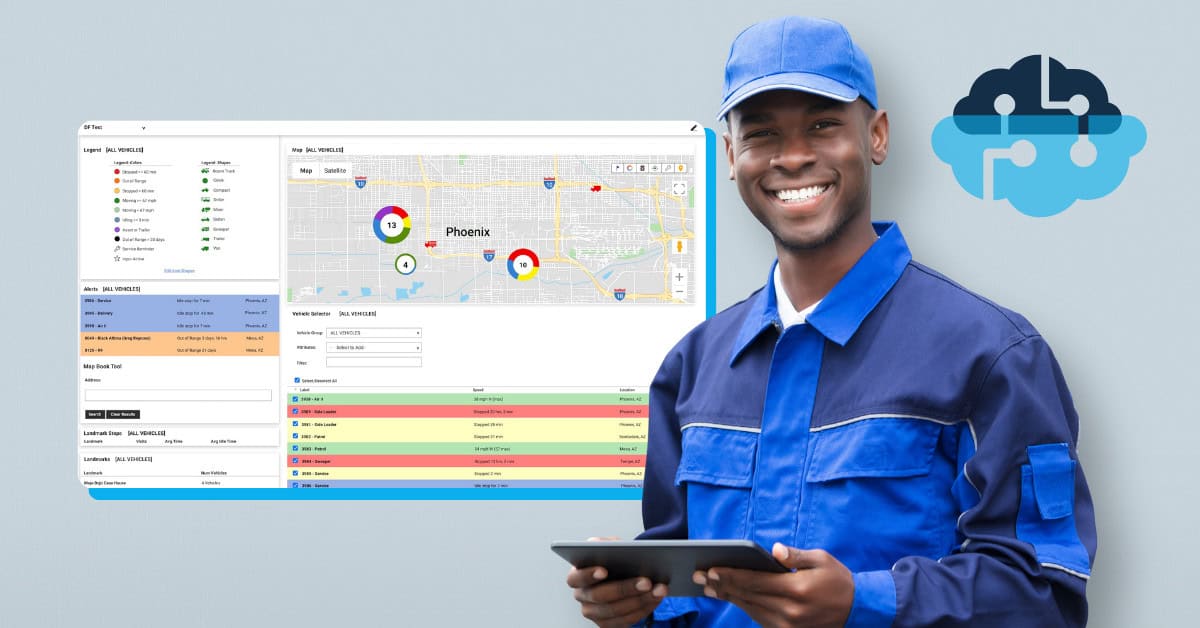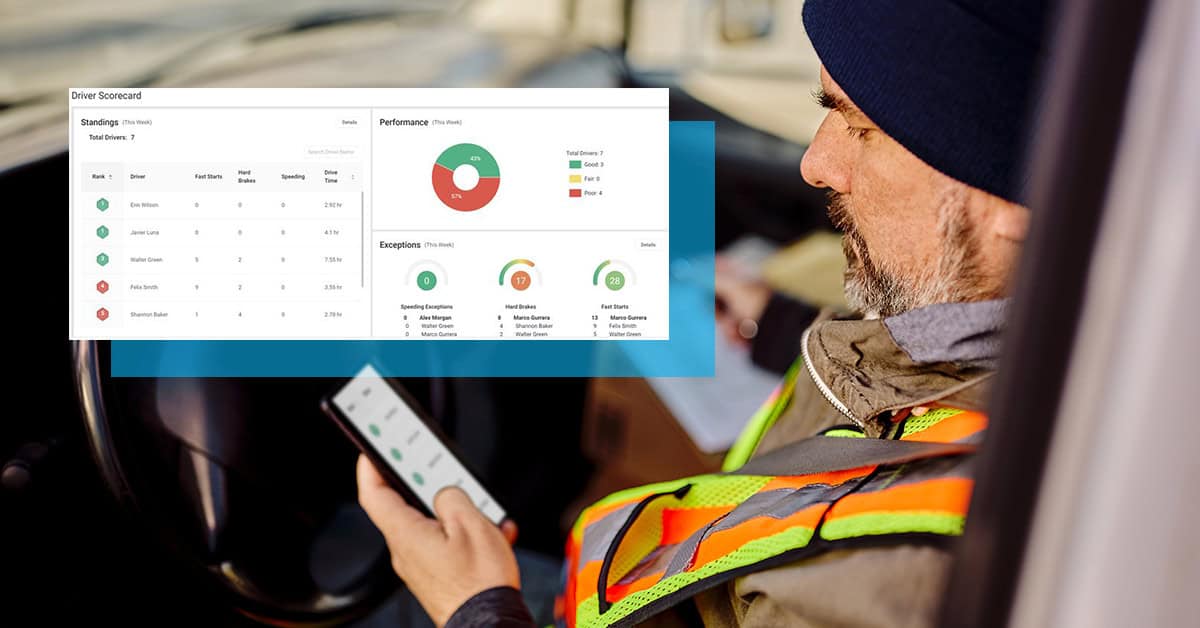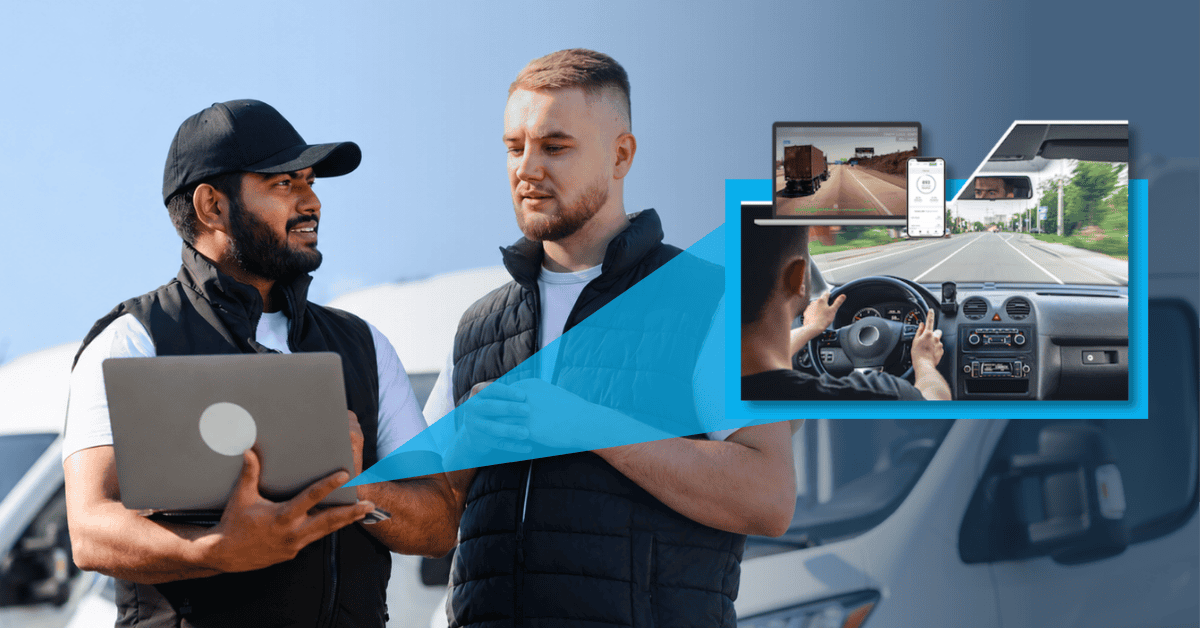

GPS Insight’s All-In-One AI dash cam is purpose-built for commercial vehicles with dual-channel recording, FMCSA-compliant event tagging, and automatic driver coaching. Also, rated as a top fleet camera in 2025-2026 telematics comparisons. Most fleets recover the investment within six months through reduced accident liability.
Commercial fleets face more risks today than ever before. Drivers share the road with distracted motorists, liability claims have grown costlier, and regulatory expectations continue to evolve. For fleet managers, one piece of technology has become essential to reducing risk and controlling costs: the dash cam.
Dash cams are no longer simple recording devices. Today, they combine high-quality video, GPS tracking, compliance features, and real-time insights that help managers keep their teams safe while proving what happened on the road. Modern commercial vehicle camera systems serve as both safety tools and operational aids, giving managers visibility that was once impossible to achieve.
Choosing the right system can feel overwhelming, but the difference between providers becomes clearer once you examine contract terms, features, and long-term return on investment. This guide compares three leading commercial vehicle camera systems: GPS Insight, Samsara, and Verizon Connect, helping you understand their strengths, weaknesses, and which solution is the best fit for your fleet.
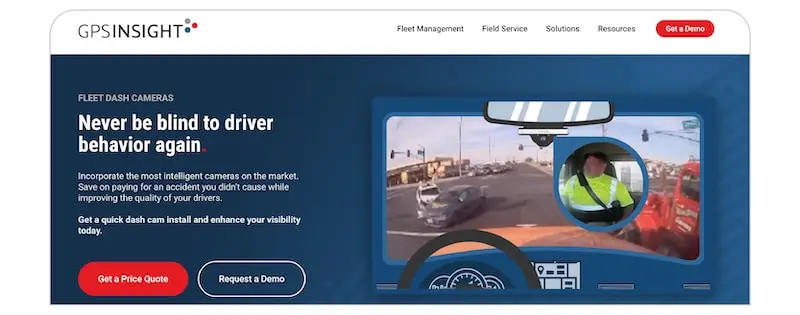
Why Fleet Dash Cams Matter: Fraudulent Claim Rates, Insurance Discounts, and Compliance Evidence Explained
Before looking at the systems themselves, it helps to understand why dash cams have become a standard investment. Beyond recording accidents, they now play a role in improving safety, lowering insurance costs, and supporting compliance. For many fleets, they also provide the accountability and transparency needed to manage risk more effectively.
- Accident protection: Fleets using video telematics see up to 52.2% percent fewer collisions, according to NHTSA research.
- Insurance savings: Insurers increasingly recognize dash cam footage as credible evidence, which leads to faster claims processing and lower premiums.
- Compliance support: FMCSA guidelines recommend safe placement of in-cab devices and align dash cams with broader electronic logging and driver safety programs.
- Driver development: Cameras that offer safety alerts or coaching features allow managers to address risky habits before they become costly incidents.
Pro Tip : Fleets that pair dash cams with coaching programs see faster ROI and longer-term improvements in driver safety.
Commercial Dash Cam Comparison: GPS Insight vs. Samsara vs. Lytx – Resolution, AI Features, and Price per Camera
Choosing the best dash cam for commercial vehicles often comes down to a few key factors like video quality, AI safety features, connectivity, and the overall platform that supports fleet management. The table below compares several well-known commercial dash cam solutions used by fleets today.
| Dash Cam Solution | Typical Hardware Price | Monthly Platform Cost | Video Quality | Key Safety Features | Best For |
| GPS Insight Dash Cam | $200 – $350 per camera | $25 – $40 per vehicle | 1080p / 4K options | Event recording, cloud video storage, integrated GPS tracking | Fleets needing video + telematics in one system |
| Lytx DriveCam | $400 – $700 | $35 – $60 | HD video | Risk detection, driver coaching tools, safety analytics | Large fleets prioritizing driver safety programs |
| Motive (KeepTruckin) Smart Dashcam | $250 – $400 | $25 – $45 | 1080p HD | AI dash cam alerts, driver scorecards, compliance tools | Trucking fleets needing ELD integration |
| Netradyne Driver•i | $400 – $600 | $35 – $60 | 1080p / multi-camera | AI driver monitoring, 360° camera coverage | Fleets focused on advanced driver monitoring |
How to Use This Comparison When Choosing a Dash Cam
The comparison table above should be used as a starting point when evaluating the best dash cam for commercial vehicles. Fleet managers should also consider operational factors such as:
- Fleet size and vehicle types
- Existing telematics systems
- Safety program maturity
- Compliance requirements
- Video storage policies
For many fleets, the best dash cam solution is not simply the camera itself but the broader fleet platform that supports safety, operations, and compliance workflows.
What These Dash Cam Prices Mean for Fleet Budgets
For most fleets, dash cam systems are typically purchased using a hardware cost plus monthly platform subscription model. Understanding how these costs work helps businesses plan their fleet technology investment more effectively.
Hardware Cost
The camera hardware itself usually ranges between $200 and $700 per vehicle depending on:
- Single vs dual-facing cameras
- AI processing capability
- LTE connectivity
- Storage capacity
- Multi-camera support
Monthly Platform Subscription
Most commercial dash cam systems also require a software subscription that covers:
- Cloud video storage
- Event detection and alerts
- Safety reporting dashboards
- Fleet telematics integrations
- Video retrieval and sharing tools
This typically ranges from $25 to $60 per vehicle per month.
Installation Costs
Some fleets also budget for installation, especially for large deployments.
Typical installation ranges include:
- Self-install: $0–$50 per vehicle
- Professional install: $75–$150 per vehicle
Why Fleets Compare Dash Cam Systems Carefully
Commercial fleets rarely choose a dash cam based on price alone. The most important consideration is how well the camera integrates with daily fleet operations.
Many fleets prioritize systems that provide:
- Automatic video capture during incidents
- Cloud storage for compliance and insurance protection
- Clear video evidence during disputes
- Integration with GPS tracking and fleet management software
- Fast access to footage when incidents occur
When these capabilities are integrated into a single fleet platform, companies often gain better operational visibility and faster incident resolution.
GPS Insight: Fleet-First Flexibility
GPS Insight has built a reputation as one of the most practical and compliance-ready solutions for small and mid-sized fleets. While competitors often push long contracts or bundled features, GPS Insight focuses on giving managers what they need with the flexibility to grow.
Key Strengths
Flexible contracts: Unlike Samsara and Verizon, GPS Insight offers month-to-month options, while also providing yearly contracts with discounted rates on hardware. This flexibility allows fleets to test solutions without being tied to long-term commitments.
Comprehensive safety tools: The platform includes dual-facing dash cams, AI-driven incident detection, and driving reports that track behaviors such as harsh braking, sharp cornering, or extended idling.
Compliance support: Dash cams integrate with DVIR workflows and Hours of Service requirements, giving managers peace of mind when it comes to regulatory audits.
Seamless fleet integration: Cameras pair naturally with GPS Insight’s broader fleet management system, so managers can monitor both vehicle performance and driver behavior from one dashboard.
Real-World Value
Fleets using GPS Insight often highlight its simplicity. The platform does not overwhelm managers with unnecessary features. Instead, it delivers exactly what they need to prevent accidents, protect drivers, and strengthen compliance records. Combined with its flexible pricing, this makes GPS Insight one of the most cost-effective choices for fleets that want dependable protection without overpaying for bundled tools.
Best Fit
GPS Insight is the clear choice for small to mid-sized fleets, mixed-asset operators, or any business that values contract flexibility and compliance alignment. It consistently delivers strong ROI without the complexity and long-term commitments tied to enterprise-focused competitors.
Looking to strengthen safety and compliance in your fleet? Explore solutions that give you flexibility, visibility, and measurable results.

Samsara: Reliable Video with Market Presence
Samsara has become a well-known name in the fleet industry, particularly among large enterprises that value advanced third-party integrations. Its dash cam solutions offer sharp video quality and predictive analytics tied to a broader IoT platform.
Strengths
- High-definition video with cloud-based storage
- Real-time safety coaching features
- Broad ecosystem integrations for large-scale operations
Limitations
- Most customers must commit to contracts ranging from one to three years
- Higher pricing compared to competitors, especially for fleets under 100 vehicles
- Many features come in bundled packages, meaning smaller fleets may pay for tools they do not use
Best Fit
Samsara works best for large enterprises that need a fully integrated platform across logistics, supply chain, and telematics. For smaller operations, the cost and long-term contract requirements may outweigh the benefits.
Verizon Connect: Broad System Integrations
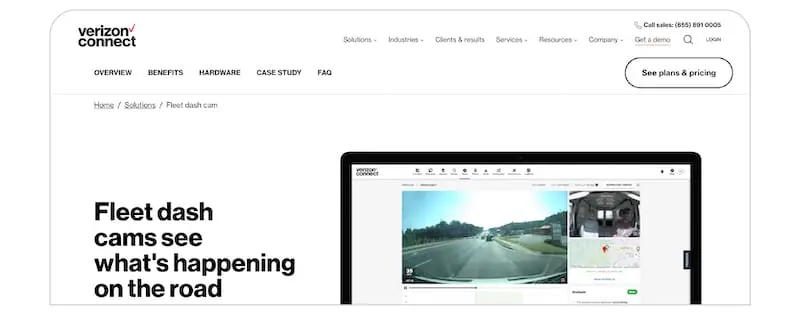
Verizon Connect approaches dash cams as part of its larger telematics ecosystem. Its in-cab video systems are best suited to companies already relying on Verizon for fleet management.
Strengths
- Reliable cellular backbone
- Integration with Verizon’s telematics products
- Cloud-based storage and reporting
Limitations
- Pricing is often higher and harder to break down due to package complexity
- Contract terms are less flexible than GPS Insight
- Support and system updates are sometimes slower due to Verizon’s large enterprise scale
Best Fit
Verizon Connect can make sense for fleets that are already tied into Verizon’s system and want an all-in-one solution. For companies that value cost transparency or need more personalized support, other providers may be a better fit.
GPS Insight vs Samsara vs Verizon Connect
GPS Insight, Samsara, and Verizon Connect each bring something different to the table. A quick comparison makes it easier to see which one aligns best with your fleet.
|
Feature |
GPS Insight | Samsara |
Verizon Connect |
|
Contract Flexibility |
Month-to-month |
1–3 years | Annual or multi-yr |
|
AI Driver Coaching |
Yes |
Yes |
Limited |
|
Video Resolution |
1080p |
1080p+ |
720–1080p |
|
Cloud Storage |
Yes |
Yes |
Yes |
| Compliance Tools | DVIR, HOS | DVIR, HOS |
HOS |
|
Best For |
SMB and mixed fleets |
Large enterprises |
Verizon ecosystem |
Legal and Compliance Considerations
When choosing a dash cam system, managers must ensure compliance with federal and state guidelines. The FMCSA does not mandate dash cams, but it does provide rules for how in-cab devices must be placed. The key requirement is that cameras cannot obstruct a driver’s view through the windshield.
Points to keep in mind:
- FMCSA compliance: Dash cams should integrate smoothly with existing electronic logging devices and driver inspection workflows.
- State privacy laws: Some states require driver consent if in-cab audio is recorded, so fleet managers must review local regulations before enabling certain features.
- Insurance and liability: Courts are increasingly accepting dash cam footage as reliable evidence in accident cases, which makes compliance with evidence handling and storage policies even more important.
Linking camera technology with compliance tools such as DVIR reports makes GPS Insight especially valuable, since it aligns technology use with legal expectations from the start.
Always check both federal and state rules before rollout to ensure your dash cam policy is legally sound and protects your fleet.
What ROI Can Fleets Expect from Video Telematics?
Fleets often ask if dash cams and video telematics truly pay off. The answer is yes. Beyond accident protection, these systems cut costs, improve safety, and deliver returns that can be measured within the first year.
- Accident reduction: Fleets using AI video telematics see 22% fewer accidents and 15% less downtime, according to Binary Semantics.
- Fuel savings: Clear data helps managers correct driver behavior, plan maintenance on time, and cut fuel costs across the fleet. (Safety Track).
- Insurance premiums: Fleets that use dash cams and telematics often qualify for 10–20 percent discounts from insurers.
- Fraud prevention: Clear footage protects drivers against staged accidents or false liability claims.
In practice, most fleets recover the cost of their dash cam investment in six to twelve months through savings in claims, reduced downtime, and lower insurance premiums. GPS Insight’s flexible contracts allow fleets to realize this return without being tied into multi-year commitments, which makes its payback timeline far easier to manage.
How to Choose Based on Fleet Size and Industry
Different fleets face different challenges, and the right dash cam choice often depends on both size and sector. What works for a small delivery business may not meet the needs of a large logistics carrier. Below is a breakdown of how GPS Insight, Samsara, and Verizon Connect align with different fleet profiles.
Small Fleets (1–50 vehicles)
Smaller fleets often operate on tight budgets and need solutions that are simple to install and easy to manage. These businesses usually cannot afford long-term contracts or feature bundles that add unnecessary costs. For this group, GPS Insight is the strongest choice. Its month-to-month plans give owners the freedom to test the system without heavy commitments. Quick setup and straightforward compliance tools make it possible for smaller teams to gain visibility and protection without needing a dedicated IT department.
Mid-Sized Fleets (50–250 vehicles)
As fleets grow, managers need stronger reporting dashboards and scalable safety alerts to monitor performance across dozens or even hundreds of drivers. Cost control remains important, but reliability and advanced features begin to matter more. GPS Insight fits well in this range because it balances detailed safety reporting, driver coaching tools, and compliance features with flexible pricing. Fleets in this category often highlight how GPS Insight gives them enterprise-grade visibility without the enterprise-level costs and lock-in.
Large Enterprises (250+ vehicles)
Enterprises tend to prioritize predictive analytics, supply chain integrations, and data-sharing across multiple departments. For fleets this size, the decision often shifts toward platforms that support broader digital transformation initiatives. Samsara appeals to many in this segment because of its predictive tools and extensive ecosystem. However, this comes at the cost of higher monthly rates and long-term contracts, which are only practical for operators that can absorb the expense and complexity.
Industry Differences
- Construction fleets benefit most from ruggedized dash cams that can withstand dust, vibration, and harsh environments. Strong DVIR alignment is also critical to keep vehicles in compliance during daily inspections. GPS Insight’s integration with compliance workflows makes it particularly well-suited here.
- Logistics fleets focus on GPS tracking tied directly to driver safety. Real-time video and safety coaching are critical to reducing liability and keeping deliveries on schedule. GPS Insight’s reporting and safety features meet these needs while staying cost-effective.
- Passenger transport companies such as shuttle services, paratransit, or charter buses often need dual-facing cameras to protect both drivers and passengers. While all three providers offer dual-facing options, GPS Insight’s flexibility and compliance support make it a strong fit for operators who cannot afford downtime or lengthy contract negotiations.
For most small to mid-sized fleets across construction, logistics, and passenger transport, GPS Insight consistently emerges as the most practical and cost-effective solution. Large enterprises with broader digital integration goals may lean toward Samsara, while Verizon Connect remains a reasonable choice for those already invested in Verizon’s telematics ecosystem.
Pro Tip : GPS Insight stands out because it adapts easily to both construction and logistics operators, where compliance and ROI drive decisions more than broad enterprise integrations.
Is The Best-Rated Dash Cam the Best for You?
Dash cams have moved from being optional add-ons to becoming central to fleet safety, compliance, and operational efficiency. While Samsara and Verizon Connect each bring value for specific scenarios, GPS Insight consistently proves to be the smarter investment for most small and mid-sized fleets.
It combines flexibility, compliance readiness, and reliable safety tools in one system, all without locking fleets into restrictive contracts. That balance of control and cost efficiency makes GPS Insight the clear choice for managers who want protection, visibility, and measurable ROI without unnecessary overhead.
Ready to see how GPS Insight can protect your drivers and strengthen your operations? Book a free demo today
Key Takeaways
- Dash cams are now essential for complete fleet safety, compliance, and cost control.
- GPS Insight offers the best flexibility with month-to-month plans and compliance-ready tools.
- Samsara fits large enterprises, but higher costs and contracts limit smaller fleets.
- Verizon Connect suits existing Verizon users, though pricing and support can be complex.
- Most fleets see ROI in 6–12 months, with fewer accidents, lower insurance, and fuel savings.