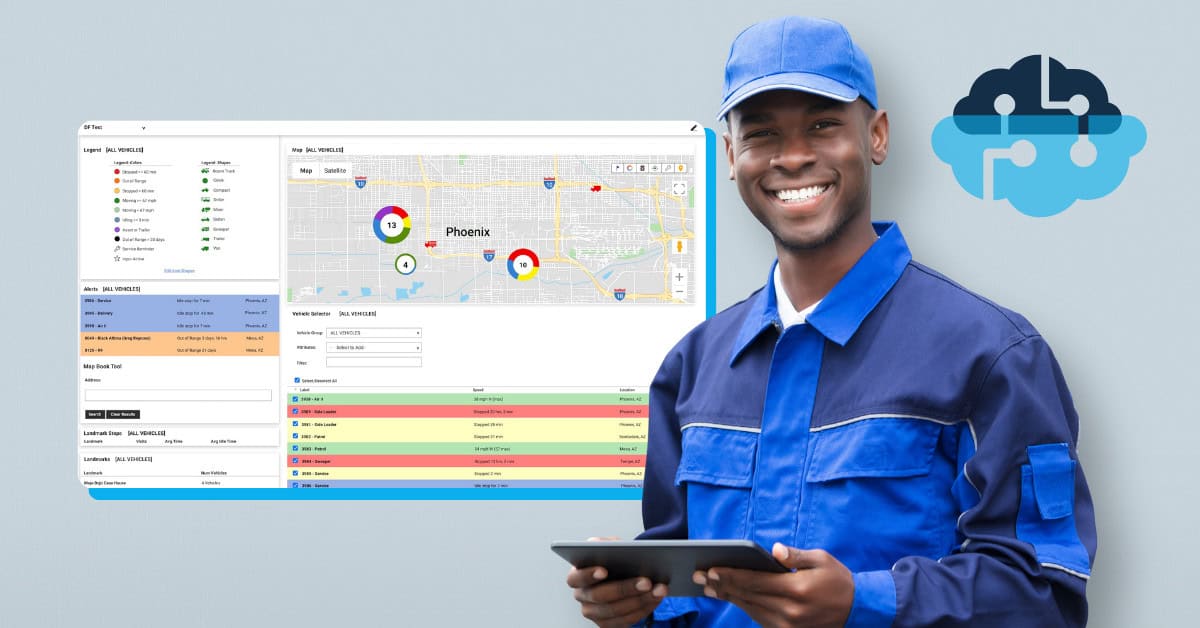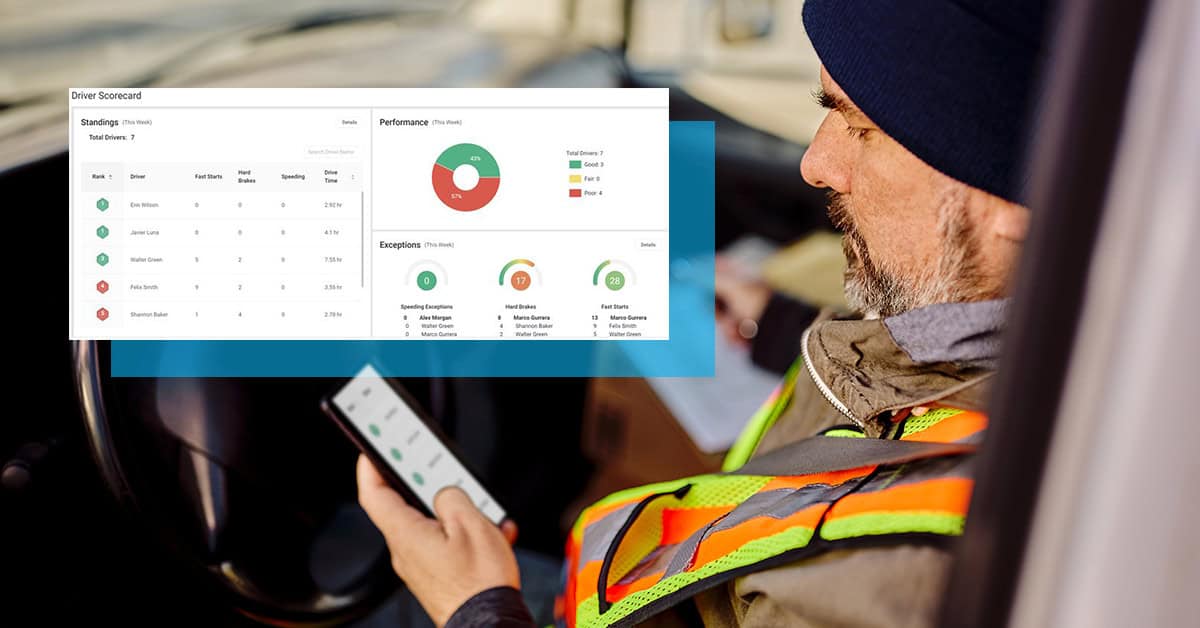

Keeping track of high-value equipment is no longer optional; it is essential. Whether you manage a construction fleet, run a rental business, or oversee logistics assets, the right GPS tracking device can help reduce theft, optimize utilization, and improve compliance. Choosing one of the best equipment tracking devices can turn that risk into a recoverable event and, in many cases, prevent it entirely.
The best equipment tracking devices in 2025 combine long battery life, rugged IP67 or IP69K designs, and reliable LTE-M or satellite connectivity to protect high-value assets. Options include long-life lithium units with up to 10 years of service, solar-powered models that deliver over 3,000 pings per charge, and plug-in or BLE beacons for powered equipment. Prices typically range from $99 to $349 for hardware, with subscriptions starting at $12 per device per month. The right choice depends on your asset type, operating environment, and reporting needs.
This guide compares leading GPS asset trackers for 2025 using objective criteria like battery life, environmental ratings, connectivity, and pricing. It includes benchmark data, vendor examples, and real-world use cases so you can make an informed choice.
Which Tracker Fits Which Asset?
Not every asset needs the same type of GPS tracker. The best equipment tracking devices are chosen based on how often the asset moves, where it operates, and whether it has a constant power source. Here is a quick snapshot to help match tracker types with the assets they suit best.
| Tracker Type | Battery Life* | Power Source | IP Rating | Best For | Avg. Price |
| Long-life Lithium GPS Tracker | 5–10 years | Sealed lithium battery | IP67/IP69K | Long-term remote assets | $199–$349 |
| Solar GPS Tracker | 3,000–3,500 pings per charge | Solar panel with backup battery | IP69K | Outdoor heavy equipment | $249–$349 |
| Plug-in/BLE Beacon | Continuous (powered) | Vehicle or asset power | IP65–IP67 | Powered machinery, trailers | $99–$199 |
Choose the best equipment tracking device that aligns with your asset’s power source and environment to maximize performance and reduce maintenance.
Which Power Source Gives the Best Battery Life for Your Equipment Tracking Device?
When uptime matters, the power source is one of the first factors to consider. A mismatch between asset type and power configuration can lead to downtime or costly maintenance visits.
10-Year Lithium Devices
Sealed lithium trackers are ideal for assets that do not have a constant power source. Laboratory testing and field data show that some models last up to 10 years on a single battery when set to transmit once per day. They are fully enclosed, tamper-resistant, and often rated IP69K, making them suitable for harsh construction or mining environments.
Use case: A utility company tracks underground generators that are only serviced annually. The long battery life eliminates the need for mid-cycle replacements.
Solar-Powered Units
For outdoor assets like loaders, backhoes, or shipping containers, solar trackers are a sustainable option. High-quality models can deliver up to 3,500 transmissions per full charge. Modern panels are efficient enough to operate with indirect sunlight for weeks. Backup lithium batteries keep them running during extended cloudy periods.
Use case: A construction rental company equips bulldozers with IP69K solar trackers pinging every six hours to monitor usage and prevent theft on job sites.
Ruggedness and Environmental Ratings
A GPS tracker’s performance depends on how well it can handle tough conditions. The best equipment tracking devices are designed to resist dust, water, extreme temperatures, and heavy use. Knowing what each ruggedness rating means will help you choose a tracker that stays reliable in your work environment.
IP67 vs IP69K Explained
- IP67: Dust-tight and protected against immersion in up to one meter of water for 30 minutes.
- IP69K: Dust-tight and protected against high-pressure, high-temperature water jets, making it the highest common rating for rugged electronics.
Also, you can choose IP69K for assets exposed to extreme weather, high-pressure washdowns, or abrasive conditions.
Operating Temperature Ranges
Most industrial-grade trackers work between -40 °F and 176 °F, making them suitable for both freezing winters and hot summer conditions. For assets like refrigerated trailers or equipment in desert locations, always confirm the device is rated for the temperatures it will face.
How Do Ping Frequency and Connectivity Affect Performance?
The rate at which a GPS tracker sends location updates has a direct effect on battery life, especially for battery-powered models. More frequent pings improve real-time visibility but shorten the device’s service span, while less frequent updates extend battery life but reduce tracking granularity.
Connectivity choice can make or break how well your tracker performs. LTE-M offers reliable nationwide coverage at a lower cost, satellite keeps you connected even in remote locations, and BLE works best for short-range tracking in yards or warehouses. Each option has its own impact on coverage, cost, and battery life. The key is to match your connectivity type with how and where your assets move so you get the most value from the best equipment tracking devices.
Cellular LTE-M vs Satellite vs BLE
| Connectivity Type | Key Features | Best Use Cases | Considerations |
| LTE-M | Cost-effective with low data rates; wide nationwide coverage; low power consumption for longer battery life | Urban and suburban fleet tracking; mixed-asset operations | Requires cellular network availability; may have coverage gaps in very remote areas |
| Satellite | Global coverage, including oceans and remote regions; works without cellular infrastructure; highly reliable in isolated locations | Offshore shipping, mining sites, and remote construction | Higher subscription costs; greater power demand than LTE-M |
| BLE (Bluetooth Low Energy) | Short-range tracking within 32.81- 328.08 feet; very low power usage; quick data transmission in dense environments | Indoor asset tracking; yard and warehouse equipment | Requires BLE gateways; limited to local range |
Note: According to Tech.co’s 2024 guide, LTE-M trackers are currently the most common choice for mixed-asset fleets due to lower subscription costs and reliable coverage.
How Ping Rates Impact Battery Life?
Doubling the ping frequency can reduce battery life by as much as 50 percent. For example, a tracker rated for 10 years at one ping per day might last only five years at two pings per day. This happens because each transmission uses power for both location detection and data transfer, drawing more energy than standby mode. In colder climates or areas with weaker network signals, the impact can be even greater, further shortening the service life. Finding the right balance between update frequency and operational needs is key to getting the most value from the best equipment tracking devices.
What Are the Pricing and Contract Terms for Equipment Tracking Devices?
The cost of an equipment tracker includes the hardware price and a recurring subscription fee for connectivity and software. Based on Tech.co’s 2024 asset tracker report, pricing varies by device type, features, and contract length, making it important to compare total costs when choosing the best equipment tracking devices.
Hardware Cost Bands
- Entry-level plug-in or BLE beacons: $99–$199 per unit
Long-life lithium or solar trackers: $199–$349 per unit
- Satellite-capable rugged devices: $299–$499 per unit
Subscription Fees
Most providers charge a monthly fee per device that covers network access, software, and support.
- LTE-M or BLE devices: $12–$20 per device per month
- Satellite-enabled devices: $20–$25 per device per month
Contract Terms: Some vendors offer flexible month-to-month agreements, while others require one- to three-year commitments. For fleets with seasonal assets, flexible contracts can significantly reduce costs.
Compliance and Theft-Recovery Metrics
GPS tracking can do more than protect against theft. For many operators, it also helps meet regulatory requirements by providing accurate location records, proof of asset usage, and compliance reporting. In industries like transportation, construction, and equipment rental, these records can be vital for audits, insurance claims, and meeting safety standards. Choosing the best equipment tracking devices ensures you not only improve security but also stay aligned with industry regulations and operational policies.
FMCSA Cargo-Theft Data
According to the Associated School of Construction, the Federal Motor Carrier Safety Administration (FMCSA) and the National Insurance Crime Bureau (NICB) report that construction site theft results in an average loss of $6,000 per incident. Areas with higher theft rates often see increased insurance premiums. Installing trackers can lower those rates by improving recovery odds.
Recovery Success Stories
- Construction Loader Recovery: A GPS Insight customer recovered a $180,000 loader within 48 hours after theft from a job site.
- Trailer Recovery: A fleet using IP69K lithium trackers recovered two stolen dry vans in less than a day by coordinating with local law enforcement.
Such cases show the tangible ROI of asset tracking, particularly for high-value equipment.
What Are the Equipment Tracker Options for 2026?
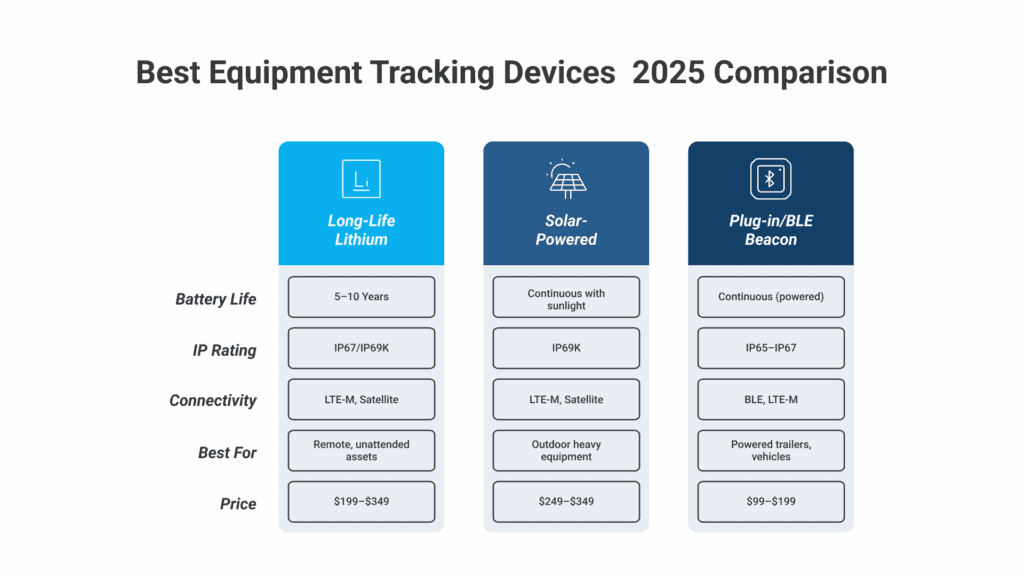
With so many models available, comparing the best equipment tracking devices side by side makes it easier to see which one fits your needs. This quick feature matrix highlights the key differences in battery life, durability, connectivity, and price.
| Feature | Long-Life Lithium | Solar-Powered | Plug-in/BLE Beacon |
| Battery Life | 5–10 years | Continuous with sunlight | Continuous (powered) |
| IP Rating | IP67/IP69K | IP69K | IP65–IP67 |
| Connectivity | LTE-M, Satellite | LTE-M, Satellite | BLE, LTE-M |
| Best For | Remote, unattended assets | Outdoor heavy equipment | Powered trailers, vehicles |
| Price Range | $199–$349 | $249–$349 | $99–$199 |
Key Takeaways:
- LTE-M is the most common for fleets with national coverage needs. A satellite is best for global or remote operations. BLE is suited for short-range yard tracking.
- Match tracker type to asset needs by considering movement frequency, environment, and power source.
- Battery life is affected by power and ping rate, with more frequent updates reducing lifespan significantly.
- Ruggedness is important, and IP69K-rated devices handle extreme weather, washdowns, and harsh sites best.
- Compare total costs by evaluating both hardware price and subscription fees when selecting the best equipment tracking devices.
- Trackers improve compliance and recovery by supporting regulatory requirements and helping recover stolen assets faster.
Final Takeaway
Choosing the best equipment tracking devices is not about buying the most expensive model. It is about finding the right fit for your asset type, environment, and operational needs. Consider factors like power source, durability, connectivity, and total cost of ownership. Rely on independent benchmarks, verified vendor specifications, and proven recovery results to guide your choice.
If you are ready to protect your assets, improve utilization, and gain real-time visibility, talk to GPS Insight today. Our team can help you select and deploy the tracking solution that delivers the best return for your operation.
Get a Quote
Request a Demo