Every fleet manager knows that one accident can cost thousands of dollars in claims, downtime, and lost trust. That is why more fleets are turning to dash cameras, not just as recording devices, but as vital safety and accountability tools.
Fleet safety is no longer optional. For many companies, dash cameras have become a standard investment to protect drivers, reduce accident claims, and improve accountability. Yet one question remains at the center of every purchase decision: how much does a fleet dash cam actually cost?
The answer depends on what type of camera you choose. Pricing varies based on resolution, number of camera views, connectivity, and the intelligence built into the system. To make this clearer, we have outlined the four main categories of dash cams, ranging from basic models to advanced AI-enabled solutions.
TL;DR
- Dash cam costs vary widely from $40 entry-level models to $1200+ AI-enabled systems, depending on features and intelligence.
- Entry-level and mid-tier cameras provide affordable protection and clearer evidence but remain reactive tools with limited automation.
- Multi-view cameras give 360° coverage and liability protection, making them valuable for fleets in high-traffic urban zones.
- AI dash cams offer the strongest return on investment by reducing accident claims, lowering insurance costs, and providing real-time driver coaching.
- Choosing the right dash cam is an investment because higher-tier solutions quickly shift from an expense to a safety and performance asset.
Entry-Level Dash Cams: Simple but Limited
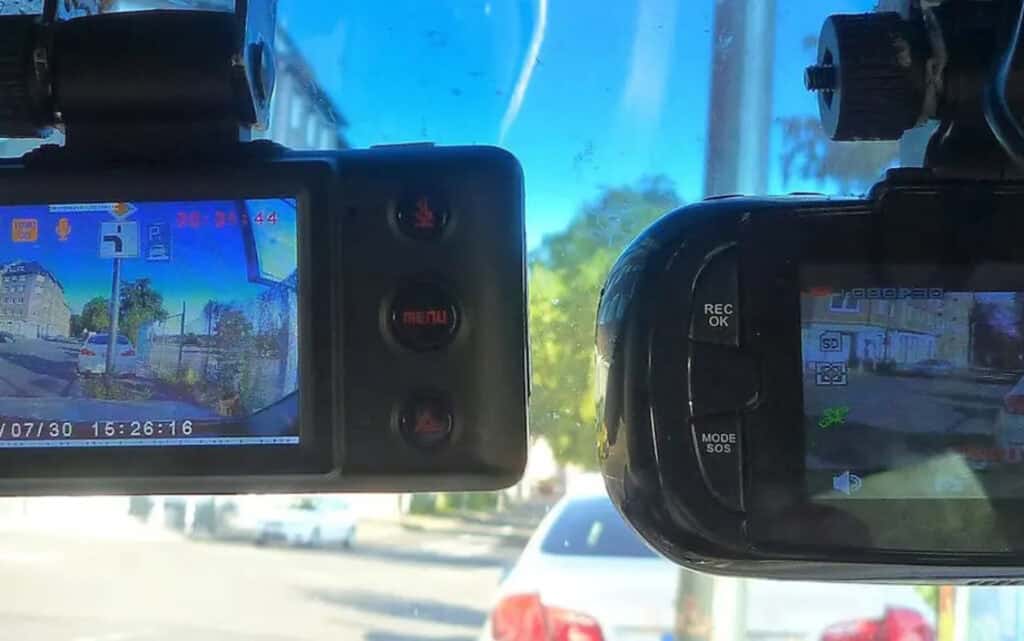
For fleets just getting started with video safety, entry-level dash cams are the most affordable option. They cover the basics by recording what happens on the road, providing proof in the event of an accident or dispute. While they provide peace of mind at a low cost, their functionality is limited compared to more advanced systems.
Price Range: $40–$100
Entry-level dash cams are the most affordable way for small operators or solo drivers to get started. These cameras usually provide:
- One forward-facing lens
- Basic HD or 1080p recording
- Loop recording that overwrites older footage
- Footage that must be reviewed manually
Best suited for:
- Independent contractors or small businesses
- Drivers who only need video proof in case of an accident
- Fleets with minimal safety monitoring needs
Limitations: These devices record but do not analyze. If an incident occurs, managers must search through hours of video. They do not provide real-time alerts or safety insights.
Mid-Tier Dash Cams: Better Clarity, Low Automation
Mid-tier dash cams are the next step up for fleets that want sharper video quality and a few added features without committing to advanced systems. These cameras often include GPS tracking and event-based recording, making it easier to review incidents with greater accuracy. They strike a balance between cost and performance, but still fall short when it comes to real-time driver coaching or automated analysis.
Price Range: $70–$250
Mid-tier dash cams add higher-quality recording and some helpful features. Many models now include:
- Upscaled or native 4K resolution for clearer evidence
- GPS tracking for speed and location logging
- Event-based triggers for collisions or harsh braking
- Optional cloud backup for incident storage
Best suited for:
- Small to medium-sized fleets
- Businesses that face frequent insurance claims
- Companies that need clearer evidence without full AI capabilities
Limitations: While they capture better video, mid-tier dash cams still work as reactive tools. They document what happened but cannot prevent unsafe behavior in real time.
Cost Comparison Table: Dash Cam Features by Price
|
Dash Cam Type |
Price Range | Key Features |
Ideal For |
|
Entry-Level |
$40–$100 | Single view, manual review | Solo drivers, small operators |
|
4K Mid-Tier |
$70–$250 | 4K video, GPS, event triggers | Small business fleets |
| Multi-View | $300–$600 | 360° coverage, SIM-enabled, multi-angle |
Regional fleet coverage |
| AI-Enabled | $600–$1200+ | Real-time alerts, automated coaching |
Safety-focused, large fleets |
Multi-View Dash Cams: Coverage from Every Angle
When a single camera view is not enough, multi-view dash cams step in to provide broader protection. By capturing footage from the front, rear, and sides, these systems give a complete picture of what happens around a vehicle. They are especially valuable in busy city routes or tight delivery zones where blind spots and side-impact incidents are common.
Price Range: $300–$600
For fleets that need more than a single forward view, multi-view cameras provide a wider perspective of both the vehicle and its surroundings. These systems are built for complex environments such as busy city streets and high-traffic delivery zones.
Typical features include:
- Front, rear, and side camera coverage with up to 360-degree visibility
- True 1080p quality across all lenses
- SIM-enabled connectivity for cloud uploads and remote monitoring
- Multiple viewpoints that help settle disputes in sideswipes, blind spot collisions, and rear-end incidents
Best suited for:
- Regional fleets that operate in urban environments
- Transit, courier, and service fleets with frequent stops and tight maneuvering
- Businesses where liability protection depends on seeing more than one angle
Limitations: These cameras expand visibility but still require manual review. While managers can see more, they do not yet benefit from automated driver behavior detection.
Advanced AI Dash Cams: Turning Video into Safety Insights
Price Range: $600–$1200+
At the top tier are dash cams that integrate artificial intelligence. These are no longer just recording tools but real-time safety systems that actively monitor and alert drivers.
Key features include:
- Dual-facing lenses for both the driver and the road
- AI models that detect distracted driving, tailgating, speeding, and fatigue
- Real-time in-cab alerts to correct risky behavior immediately
- Edge computing that processes video on the device for instant results
- Fleet-wide dashboards that highlight patterns and coaching opportunities
Best suited for:
- Large fleets with strong safety goals
- Businesses looking to reduce accident claims and lower insurance premiums
- Safety-first organizations that need compliance with strict regulations
Return on investment example: A regional logistics fleet that implemented AI-enabled cameras reported a 37% drop in accident claims within six months and cut video review time by more than half, thanks to automated event detection.
When evaluating dash cams, look beyond upfront cost and consider long-term savings in accident claims, insurance premiums, and management time. Investing in smarter technology often pays for itself within a matter of months.
How AI Dash Cams Work ?
AI dash cams are more than just cameras. They use smart technology to detect risky driving, send instant alerts, and capture important footage that keeps drivers and fleets protected. The technology inside these devices combines several layers of intelligence:
- Computer Vision Models: Convolutional neural networks (CNNs) analyze live video streams, detecting behaviors such as phone use, lane departure, or drowsiness.
- Edge AI Processing: Instead of sending all footage to the cloud, the dash cam itself runs the models and provides alerts in seconds, ensuring drivers get immediate feedback.
- Fleet-Wide Data Analysis: Once uploaded, aggregated data reveals larger safety patterns such as risky routes, high-incident time windows, and recurring driver behaviors.
- Automated Coaching and Reports: Safety managers receive weekly summaries that flag top incidents, provide driver scores, and identify where extra training is needed.
How Language Models Are Shaping Fleet Safety in 2026
Artificial intelligence is no longer limited to what the camera sees. Large language models are now becoming part of the safety ecosystem, helping organizations interpret data more effectively. By turning raw footage and alerts into clear insights, they support faster and smarter decision-making. This evolution is transforming the way companies act on safety information across their operations.
- Natural language safety reports: Instead of sifting through dashboards, managers receive simple text summaries explaining the most important events of the week.
- Predictive scoring: LLM-powered systems can forecast which drivers or routes are at highest risk, allowing managers to schedule preventative training.
- Insurance alignment: Fleets can share AI-generated summaries with insurers to negotiate better premiums by proving that risk is actively managed.
This shift means dash cams are no longer passive recorders but active decision-making tools in day-to-day fleet operations.
Why the Right Dash Cam Choice Matters?
Choosing the right dash cam is not only about cost but about long-term return on investment. Entry-level cameras provide affordable protection for small operators, mid-tier cameras add clarity and GPS tracking, multi-view cameras expand coverage, and AI-enabled systems deliver proactive safety management.
Companies that invest in higher-tier solutions often see measurable results. Accident claims decrease, insurance costs go down, and managers save valuable hours every week. In short, what starts as an expense quickly turns into a performance and safety asset.
Not all dash cams are created equal. At GPS Insight, our smart camera solutions combine real-time driver alerts, AI-powered analytics, and compliance tools into a single platform. Fleets using our technology gain better visibility, stronger risk management, and reliable evidence when it matters most.