In today’s competitive landscape, Service Operations Management and Field Service Management (FSM) play a pivotal role in ensuring operational efficiency and customer satisfaction. Businesses rely on tools like FieldAware or ServiceBridge, a leading field service software solution and a real-time field service management software that allows business owners to streamline operations and provide data-driven insights. Among the most impactful features FieldAware offers is its First Time Fix Rate (FTFR) Report, which allows businesses to measure and improve the success of resolving service issues on the first visit and can help businesses improve functionality.
What is First Time Fix Rate (FTFR)?
First Time Fix Rate (FTFR) is a gamechanger key performance indicator (KPI) in field service businesses that tracks the percentage of service issues that reach job completion by field technicians during the initial visit with a customer. For example, if 55 jobs were undertaken in a given period and 42 were completed successfully on the first visit, the FTFR would be calculated as:
42/55 = 0.764 or 76.4% FTFR
A high FTFR—sometimes referred to as the One-Visit Resolution Rate or First-Visit Repair Success—signifies operational efficiency, effective resource utilization, and high customer satisfaction. Conversely, a low FTFR often indicates the need for improved On-Site Service Coordination, better Technician Dispatching Solutions, or more robust Work Order Management.
Why FTFR Matters for Your Business
First Time Fix Rate, also known as Initial Visit Resolution or Single-Trip Fix Rate, is a critical metric that impacts multiple facets of a business. Enhanced customer satisfaction is one of the most immediate benefits. Customers expect quick and effective service, and when technicians resolve service requests on the first visit, it strengthens customer loyalty and improves brand perception. Fewer repeat visits mean reduced operational costs and less downtime for your technicians, allowing your business save on labor, fuel, and other logistical expenses.
FTFR also plays a significant role in optimizing Field Service Operations. By ensuring technicians are equipped with the right tools, parts, and information, businesses can maximize their productivity. Tracking FTFR—or First-Attempt Repair Rate—allows managers to identify performance gaps and address them through targeted technician training programs. Data-driven insights from FTFR reporting empower businesses to continuously refine their workflows and achieve advancements in efficiency and service quality. This cycle of continuous improvement can help your business get from where it is now, to where you hope it’ll be in the future efficiently without letting your business needs fall through the cracks.
How FieldAware’s FSM Software Supports FTFR
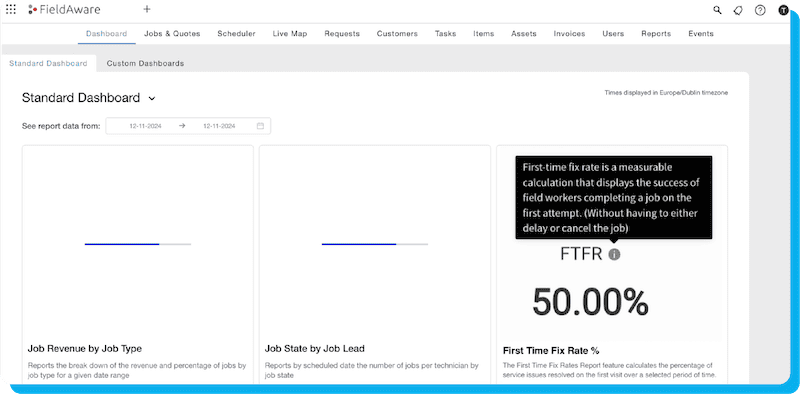
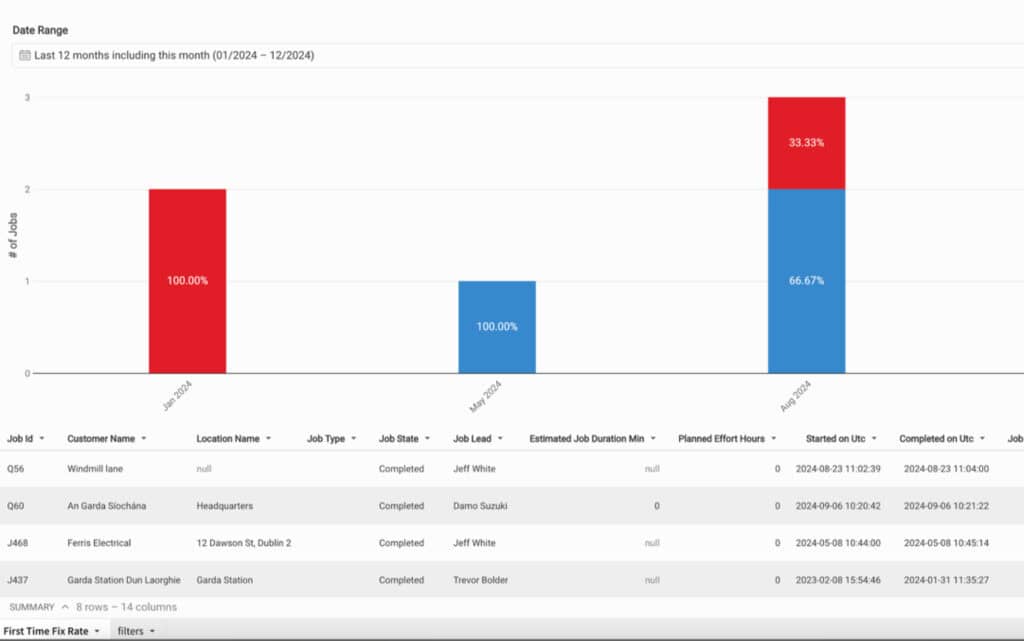
FieldAware’s FSM software addresses common challenges in field operations by offering tools and insights that drive performance and increase overall efficiency. The First Time Fix Rate Report is calculated automatically over a selected period, providing businesses with a clear and consistent way to measure performance. Detailed analytics within the report help identify trends, recurring issues, and areas needing improvement. For instance, if delays frequently occur, it might indicate the need for better inventory management or additional technician training or time tracking.
FieldAware also optimizes Technician Scheduling, ensuring that the right service technician with the right tools is dispatched to each job. This increases the likelihood of achieving a First-Call Fix Rate or One-Stop Repair Success. Additionally, the software’s customizable reporting features allow businesses to tailor reports to specific timeframes or job types, making the data relevant and actionable.
Limitations and Dependencies
Although FTFR—or Initial Repair Completion—is a valuable metric, it is not without its limitations. It only applies to jobs that technicians complete on the first attempt without any delays, cancellations, or requirements for additional parts or information. This makes it essential for businesses providers to maintain a well-stocked inventory and give their technicians accurate and comprehensive job details upfront.
To gain insights from the FTFR report, businesses need to have access to the FieldAware platform and ensure that their technicians are adequately trained. Reliable tools and resources are also crucial for enabling technicians to resolve issues efficiently. These dependencies highlight the importance of robust internal processes to fully leverage the benefits of FTFR reporting.
Real-World Use Case: Calculating FTFR
Imagine a business that completes 55 service jobs in a month. Of these, 42 are resolved on the first visit. Using FieldAware’s FTFR Report, the business calculates its FTFR as 76.4%. This insight helps the business identify opportunities for improvement, such as:
- Ensuring technicians have the required parts and tools for common repairs.
- Providing additional training for recurring technical and training on proper task management.
- Route optimization automatically enables Dispatchers to reduce travel time between jobs.
Benefits of Using FieldAware’s FTFR Report
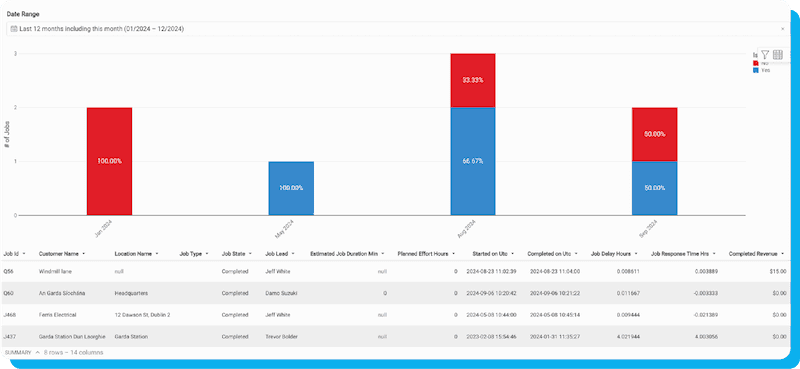
The FieldAware platform goes beyond traditional field service management by providing a comprehensive solution for tracking and improving FTFR. The benefits include:
- Increased Efficiency Automating FTFR calculations and insights allows managers to focus on actionable strategies rather than data collection.
- Better Decision-Making With clear, data-driven insights, businesses can make informed decisions about Customer Service in the Field, resource allocation, technician training, and operational improvements.
- Scalable Solutions Whether you’re a small business or a large enterprise, FieldAware’s customizable features adapt to your needs, ensuring consistent performance tracking.
- Improved Customer Experience By reducing repeat visits and achieving a Same-Day Service Success Rate, businesses can enhance customer trust and satisfaction, fostering long-term loyalty.
Tracking and improving your First Time Fix Rate is essential for optimizing field service operations. With FieldAware’s robust optimization tool, Smart Scheduler, businesses can leverage features like the FTFR Report to drive efficiency, enhance customer satisfaction, and achieve sustainable growth.
Ready to improve your team’s performance? Explore how FieldAware can help transform your operations and take your business to the next level by booking a free demo to learn more.