
Telematics Companies
Finding the Right Fit
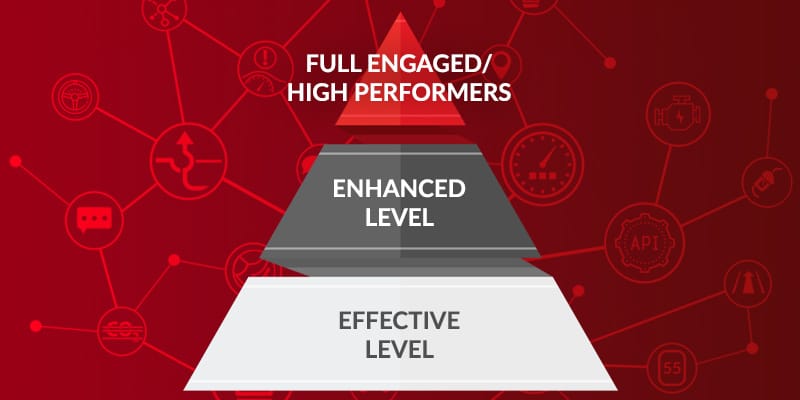
Client-Relationship Pyramid
If you have been researching different telematics companies, trying to find the right fit for your business, then you’ve most likely come across these companies:
Verizon Connect (formerly Fleetmatics, Telogis, and NetworkFleet)
Provides solutions to monitor and manage your fleet.
Founded: 1999
Geotab
Provides a full-featured GPS tracking solution.
Founded: 1996
Zonar
Provides a picture of all fleet operations.
Founded: 2001
Fleet Complete
Provides a comprehensive telematics platform.
Founded: 1998
GPS Trackit
Delivers a suite of web-based fleet management solutions.
Founded: 1999
InTouch GPS
Offers technology to provide all the tools to manage your fleet.
Founded: 2005
US Fleet Tracking
Provides GPS tracking and asset management.
Founded: 2005
Finding a telematics solution is not just about finding a software solution; it’s about finding the right partner. A telematics vendor who offers features alone isn’t enough. It’s important to find a company that cares about helping you solve your fleet challenges, someone invested in your success the way that you are. That’s why it’s also important not to rush out and buy the cheapest solution you can find.
Telematics providers fall into one of these three categories based on the client-relationship pyramid:
Effective Level
Telematics vendors in this level of the pyramid offer basic features for businesses looking for a cost-effective technology. While these vendors may offer a lower price for their solution, they typically don’t offer customer service options. The effective level is best for businesses looking for dots on a map only.
Enhanced Level
Enhanced level telematics companies offer more features and provide a basic level of return on investment (ROI), but typically do not offer anything beyond basic customer service. Telematics companies that fall in this level of the pyramid are usually large companies with vast resources, but it can leave you feeling like a number.
Fully Engaged/High Performers
Fully engaged telematics partners are companies who have a complete understanding of what their customers are trying to achieve and engage in strategic planning and ongoing progress reviews. These companies give you personalized service and have a vested interest in your success the way you are. They go beyond being just a vendor, they are a partner. While these telematics companies offer the best customer experience and technology, they will be priced higher than a basic telematics solution.
Depending on what your objectives are with a telematics solution, or the challenges you need help solving within your fleet, it’s important to understand what type of telematics company is the right fit for your organization. Asking the right questions to telematics vendors will help narrow your search for a partner to do business with.